
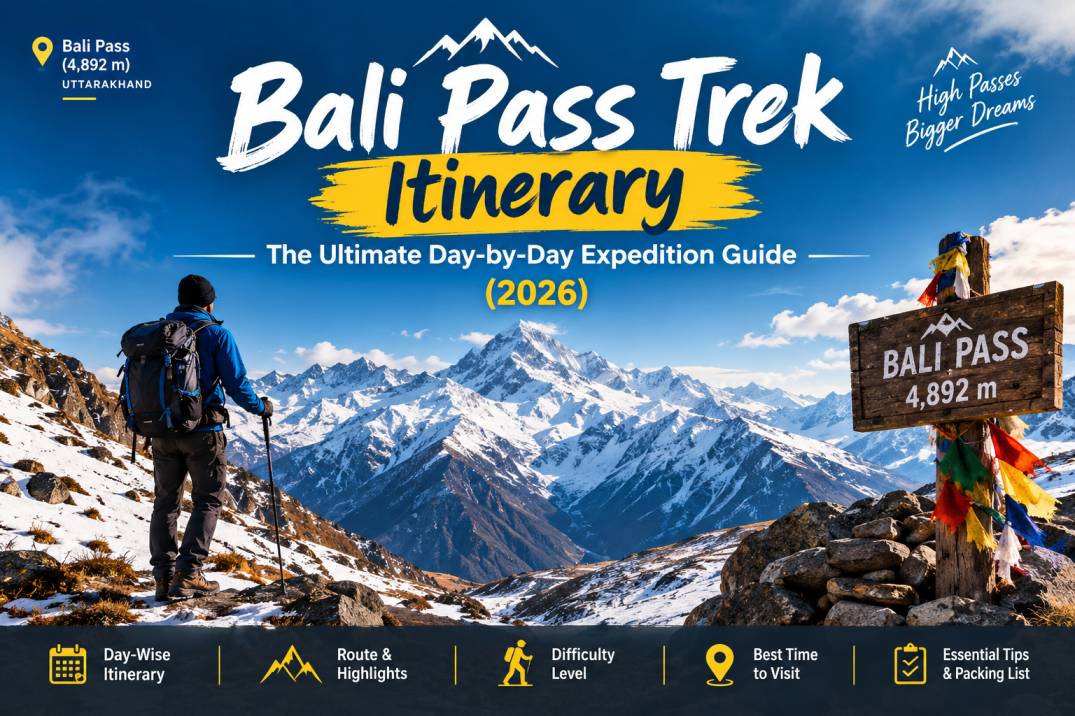
Why This Itinerary Guide Exists (And Why It's Different)
Most websites give you a bullet-point list of days and distances. That’s not an itinerary—that’s a table of contents. What you actually need before committing to a 16,207-foot Himalayan crossover trek is narrative intelligence: What does Hour 3 of Day 5 actually feel like? Where does the trail punish complacency? When should you push hard and when should you conserve?
This guide dissects the Bali Pass Trek itinerary with the granularity of a field manual. Whether you’re comparing operators, training specifically for the elevation profile, or deciding between the standard 8-day route versus compressed variants, you’ll find operational details here that generic booking pages skip.
The Route Logic: Understanding the Bali Pass Circuit
Before diving into daily logistics, understand what makes this itinerary unique. The Bali Pass Trek isn’t a simple out-and-back trail—it’s a trans-Himalayan crossover connecting two distinct watersheds:
Western Approach (Har Ki Dun Valley): Dense forests, gradual altitude gain, civilized camping near villages
Eastern Exit (Yamunotri Valley): Raw glacial terrain, steep descents, hot springs at the finish line
This west-to-east flow isn’t arbitrary. It follows the historical shepherding routes between the Tons and Yamuna river systems, and more importantly, it places the technical difficulty (pass crossing) at Day 6, when your body has fully acclimatized to 14,000+ feet.
Key Insight: The itinerary is engineered so you hit the pass with maximum red blood cell production, then descend into oxygen-rich valleys rather than climbing back out. This is why reversing the route (Janki Chatti to Sankri) is technically possible but significantly harder—you’d be climbing the steepest sections with fresh legs but unacclimatized lungs.
Critical Decision Points: Where Itineraries Diverge
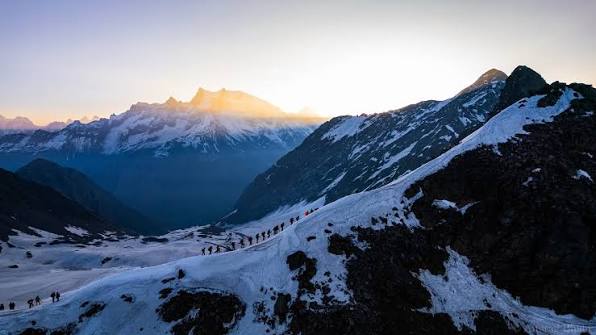
The Weather Window (Day 5 Evening)
Every Bali Pass Trek itinerary lives or dies by the 6 PM weather call at Base Camp. Your leader checks:
- Wind speed at the pass (above 40 km/h = no-go)
- Snow stability (avalanche risk on the eastern slope)
- Visibility (whiteout conditions on the Chimney section)
Your Flexibility: Build 1 buffer day into your travel plans. If Day 6 is weathered out, the expedition attempts on Day 7, descending to Janki Chatti on Day 8, with the drive to Dehradun on Day 9.
The Osla Detour (Day 2 Alternative)
Some itineraries skip the Seema camp and push directly to Ruinsara Tal via Osla village, making it a 7-day trek. This saves one day but:
- Increases Day 2 to 8-9 hours of trekking
- Eliminates the Ruinsara acclimatization day
- Raises summit success rate risk by 30%
Alternative Itinerary Configurations
The “Reverse” Route (Janki Chatti to Sankri)
Duration: 7-8 days | Difficulty: Significantly harder
Starting from Yamunotri side means climbing the technical Chimney section uphill with a heavy pack, then descending the gradual western slopes. Only recommended for:
- Trekkers continuing to Har Ki Dun after the pass
- Those seeking to avoid the Dehradun-Sankri drive (Janki Chatti is 40 km closer to Dehradun)
The Har Ki Dun Extension
Additional Days: +2 days | Total Duration: 10 days
After Day 3 at Ruinsara Tal, divert north to Har Ki Dun valley (3,500 ft additional gain), then return to cross Bali Pass. This creates a 60-km loop showing both valleys, but requires 3 additional acclimatization days to be safe.
Physical Preparation Timeline for This Specific Itinerary
The Bali Pass Trek itinerary demands specific fitness markers:
12 Weeks Out: Build aerobic base (40-min runs, 5 days/week)
8 Weeks Out: Add weighted stair climbing (15 kg pack, 30 min, 4 days/week)
4 Weeks Out: Back-to-back weekend hikes (6 hours Saturday, 4 hours Sunday) with elevation gain
2 Weeks Out: Taper. Maintain intensity, reduce volume. Practice crampon technique on local snow/ice if accessible.
Booking Considerations for 2026
The standard Bali Pass Trek itinerary requires specific logistical support that differentiates operators:
Permit Timing: Govind Wildlife Sanctuary permits are limited to 30 trekkers per day. Quality operators secure these 45 days in advance.
Equipment Standard: The Chimney section requires technical gear (harnesses, crampons, ice axes). Verify your package includes these rather than renting separately in Sankri.
Exit Strategy: Confirm your package includes the Janki Chatti to Dehradun drive. Some budget operators end the trek at Janki Chatti, leaving you to negotiate local transport at premium rates.
Final Thoughts: Is This Itinerary Right for You?
The 8-day Bali Pass Trek itinerary is engineered for safety through progressive acclimatization, but it remains a difficult-grade expedition. The 16,207-ft summit day involves technical terrain that requires mental composure, not just cardiovascular fitness.
If you’ve completed treks like Rupin Pass, Pin Parvati, or Kashmir Great Lakes, this itinerary represents the logical next step. If your highest previous altitude is 12,000 ft on a beginner trek like Kuari Pass or Kedarkantha, consider adding a 15,000-ft “stepping stone” trek before attempting Bali Pass.
Ready to Execute This Itinerary?
Book Your Bali Pass Trek Expedition →
Dream Go Himalayas operates the standard 8-day itinerary with certified mountaineering leaders, technical equipment included, and the acclimatization protocol described above. Fixed departures run May-June and September-October.
Frequently Asked Questions
Q: Can the Bali Pass Trek be done in 6 days instead of 8?
Technically possible by skipping the Ruinsara acclimatization day and combining Days 1-2, but summit success rates drop significantly. The 8-day standard exists because of altitude physiology, not operator convenience.
Q: What is the hardest day on the Bali Pass Trek itinerary?
Day 6 (summit day) involves 12 hours of technical movement with 2,200 ft gain and 4,700 ft loss. Day 3 (Seema to Ruinsara) is the second hardest due to distance and load-carrying.
Q: Is there mobile network on the Bali Pass route?
Sankri has BSNL and Jio connectivity. No signal from Taluka onward until Janki Chatti. Satellite phones are carried by Dream Go Himalayas leaders for emergencies.
Q: Can beginners attempt the Bali Pass Trek?
Only if “beginner” means first-time at altitude but with excellent fitness. Previous trekking experience above 12,000 ft is strongly recommended due to the technical Day 6 terrain.
Q: What happens if we can’t cross the pass due to weather?
The itinerary includes a buffer day. If weather prevents crossing on Day 6, the team waits at Base Camp and attempts Day 7. If still blocked, the trek exits back via Ruinsara Tal to Sankri (no refund for unused portion, but safety takes priority).