Planning a Chopta Tungnath Trek but stuck on the most important question — which month should you actually go?
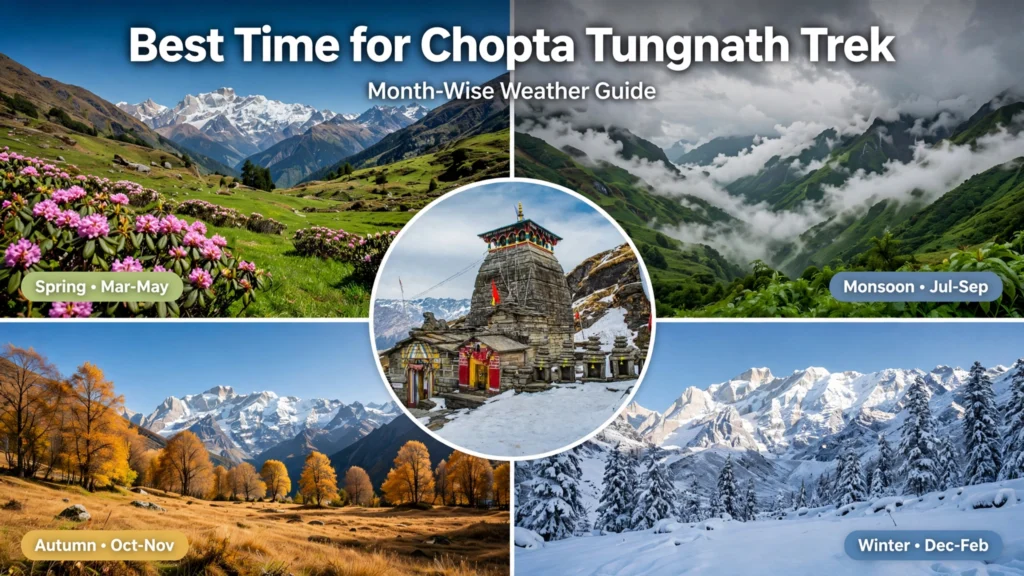
You are not alone. The same 3.5 km trail from Chopta to Tungnath feels like four completely different treks depending on when you visit. In April, you might walk through tunnels of crimson rhododendrons with snow still crunching under your boots. In October, the Himalayan peaks appear so sharp they look painted onto the sky. In January, everything — the temple, the trees, the meadows – disappears under a thick white blanket.
That is why there is no single “perfect” month for everyone. The best month for Chopta Tungnath Trek depends entirely on what you want: snow, flowers, comfortable trekking weather, clear mountain views, fewer crowds, or the spiritual experience of the temple itself.
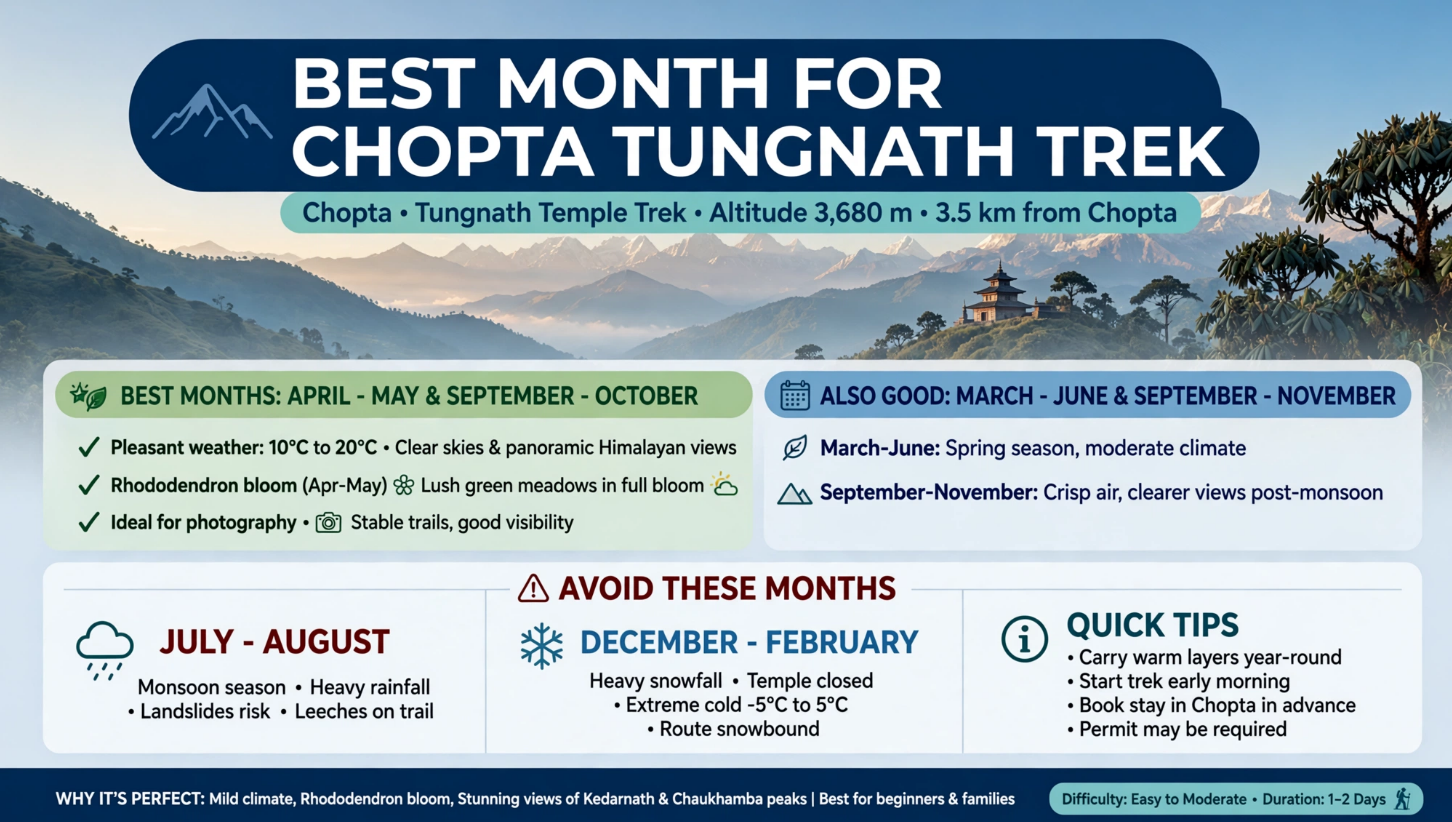
For most travellers, April to June and September to November offer the most practical and rewarding conditions. If snow is your main goal, December to February is a completely different – and more demanding – experience.
Quick Answer: What Is the Best Month for Chopta Tungnath Trek?
Here is the straight answer, month by month:
- March: Early rhododendron blooms begin; snow still deep on the trail; temple closed
- April: Best for rhododendron flowers and lingering snow patches; temple reopens early May
- May: Pleasant weather, temple open, ideal for first-timers and families
- June: Greenest landscapes, warmest days, comfortable trekking before monsoon
- July–August: Monsoon — lush but risky; slippery trails and landslide concerns
- September: Fresh post-monsoon greenery; fewer crowds; good visibility
- October: Excellent month for clear Himalayan views and photography
- November: Quiet trails, beginning of winter, temple closes mid-month
- December: Fresh snowfall begins; winter trek season starts; temple closed
- January: Peak snowfall; deepest snow; most challenging but most magical
- February: Snow begins to recede; better trail access; fewer crowds than January
Temple opening date for 2026: The Badrinath–Kedarnath Temple Committee (BKTC) has announced 2 May 2026 as the opening date. The temple typically closes in mid-November (around Diwali), with the tentative 2026 closing date around 4 November 2026.
Tungnath Temperature Month by Month (2026)
Understanding the actual temperature range is the first step to choosing your month. Remember: Tungnath sits at 3,680 metres (12,073 ft), roughly 1,000 metres higher than Chopta base camp. The temperatures below are for the Tungnath temple level — Chopta will be milder, and Chandrashila summit will be colder still.
January
☀️ Day Temperature: 4°C
🌙 Night Temperature: -6°C
❄️ Snow Chance: High
🛕 Temple Status: Closed
February
☀️ Day Temperature: 7°C
🌙 Night Temperature: -4°C
❄️ Snow Chance: High
🛕 Temple Status: Closed
March
☀️ Day Temperature: 10°C
🌙 Night Temperature: 2°C
❄️ Snow Chance: Melting
🛕 Temple Status: Closed
April
☀️ Day Temperature: 15°C
🌙 Night Temperature: 2°C
❄️ Snow Chance: Low (patches)
🛕 Temple Status: Closed (opens early May)
May
☀️ Day Temperature: 20°C
🌙 Night Temperature: 4°C
❄️ Snow Chance: None
🛕 Temple Status: Open
June
☀️ Day Temperature: 22°C
🌙 Night Temperature: 8°C
❄️ Snow Chance: None
🛕 Temple Status: Open
July
☀️ Day Temperature: 19°C
🌙 Night Temperature: 9°C
❄️ Snow Chance: None
🛕 Temple Status: Open
August
☀️ Day Temperature: 18°C
🌙 Night Temperature: 10°C
❄️ Snow Chance: None
🛕 Temple Status: Open
September
☀️ Day Temperature: 16°C
🌙 Night Temperature: 8°C
❄️ Snow Chance: None
🛕 Temple Status: Open
October
☀️ Day Temperature: 15°C
🌙 Night Temperature: 5°C
❄️ Snow Chance: None
🛕 Temple Status: Open
November
☀️ Day Temperature: 13°C
🌙 Night Temperature: 3°C
❄️ Snow Chance: Possible
🛕 Temple Status: Closes mid-Nov
December
☀️ Day Temperature: 7°C
🌙 Night Temperature: 2°C
❄️ Snow Chance: High
🛕 Temple Status: Closed
Key insight: Even in June — the warmest month — nights at Tungnath drop to around 8°C. Always pack for the night temperature, not the afternoon sunshine.
Chopta Tungnath Trek in March: The Pre-Season Window
March is a transition month that most travellers overlook.
The temple is still closed, and snow from winter remains deep on the trail — often 1–3 feet or more in shaded sections. But something remarkable is happening beneath the white surface: rhododendron buds are beginning to shake off the last of the winter snow.
Why consider March?
- Rhododendron buds begin forming; early blooms appear in the lower forests
- Snow is still abundant for a proper winter experience
- Zero temple crowds — you will have the trail almost entirely to yourself
- Accommodation at Chopta is limited but cheap; many properties remain closed
The catch: The temple is closed, road access can be blocked by snow, and you need full winter gear. This is for experienced snow trekkers only.
April: Snow Meets Spring (The Photographer's Month)
April is one of the most visually dramatic months on the Chopta Tungnath trail.
Winter has not completely disappeared — depending on the year’s snowfall, you may still find 1–2 feet of snow on the higher sections near the temple. At the same time, the forests between Chopta and Tungnath explode into colour as rhododendrons reach their peak bloom.
Why April is special
According to trekking experts, rhododendrons in the Uttarakhand region bloom from late February until mid-April, with the peak occurring between mid-March and mid-April. On the Deoriatal-Chandrashila trail specifically, the section from Baniya Kund to the summit retains snow until late April, creating a spectacular contrast of pink and crimson flowers against white snow.
- Rhododendron forests show bright scarlet, magenta, and pink colours
- Snow patches remain visible at higher sections — a genuine “two seasons in one day” experience
- Weather gradually becomes more comfortable, though mornings and evenings stay freezing
- Photography opportunities are unmatched — the pink-against-white contrast is rare
Important: The temple typically reopens in early May (2 May 2026). If your primary goal is temple darshan, confirm the exact opening date before booking. If your goal is the trek and the flowers, April is outstanding regardless of the temple status.
May: The Most Comfortable Month for First-Timers
May brings a noticeable change to Chopta. The weather stabilises, the trail becomes fully accessible, and the surrounding landscape turns a rich green.
For someone doing the trek for the first time, May is arguably the safest and most comfortable choice. You get the full Himalayan atmosphere — clear peaks, green meadows, open temple — without making snow or extreme cold the central challenge of your trip.
May is ideal for:
- First-time trekkers and families with basic fitness
- Temple visitors (the temple is open and rituals are in full swing)
- Nature lovers who want green forests without monsoon risk
- Travellers who prefer moderate, predictable weather
Day temperatures hover around a pleasant 20°C, while nights drop to roughly 4°C – cold enough to feel like the mountains, but manageable with a good jacket.
June: Green Chopta Before the Monsoon
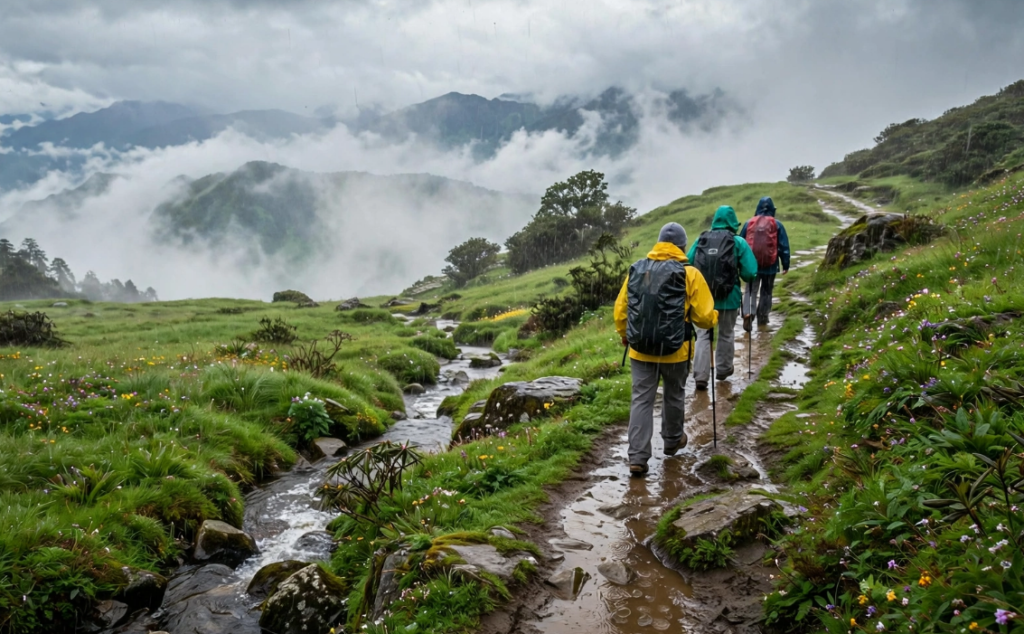
June is the warmest month at Tungnath, with daytime temperatures reaching approximately 22°C and nights around 8°C.
The landscape around Chopta is at its greenest. The meadows look fresh, the forests are dense, and the overall atmosphere is one of abundance. It is also an excellent period for combining trekking with a peaceful mountain holiday.
However, June is when the monsoon begins to make its presence felt. The second half of the month can bring occasional pre-monsoon showers, and weather patterns gradually become less predictable.
If you want green scenery + comfortable trekking conditions, June is a strong option — but aim for early June and check the forecast before travelling.
July and August: Should You Trek During Monsoon?
This is the period where your travel plan needs the most caution.
Rain transforms the mountains. The forests look incredibly green and atmospheric, the air feels fresh, and the crowds disappear completely. But the risks are real and significant:
- Slippery trails: The stone path from Chopta to Tungnath becomes slick with moss and mud
- Landslide risk: Mountain roads between Rudraprayag and Chopta are vulnerable during heavy rainfall
- Poor visibility: Fog and clouds often obscure the very peaks you came to see
- Leeches: Active in the forest sections during sustained rain
The problem is predictability. A clear morning can turn into a rainy afternoon, and road conditions can change within hours. For a first-time trekker with fixed travel dates, July and August are generally not the easiest months to choose.
That said: If you are an experienced traveller who enjoys misty forests, doesn’t mind getting wet, and can keep flexible dates with a buffer day, the monsoon months offer a solitude that no other season matches.
September: Fresh Green Landscapes After the Rain
September is a beautiful transition month that many experienced trekkers consider a hidden gem.
Once the heavy monsoon period begins to retreat, the forests and meadows around Chopta appear exceptionally fresh. The dust and haze of summer have been washed away, and the first hints of autumn clarity begin to appear.
Why choose September?
- Fresh mountain greenery at its most vibrant
- Fewer peak-season crowds than May–June
- Pleasant trekking conditions with receding rain
- Post-monsoon landscapes that feel newly born
- A quieter Himalayan experience
Caution: September can still receive occasional rain, especially in the first half of the month. Always check local weather and road conditions before starting the journey.
October: The Best Month for Himalayan Views
If your main priority is clear mountain views, October deserves serious consideration — and possibly the top spot.
After the monsoon clears, visibility improves dramatically. The Himalayan peaks — Nanda Devi, Trishul, Chaukhamba, Kedar Dome — appear much sharper against deep blue skies. The autumn air is crisp, the trails are dry, and the photography conditions are exceptional.
Why October stands out:
- Crystal-clear visibility — post-monsoon skies are the cleanest of the year
- Dry trail conditions — no mud, no snow, no slipperiness
- Comfortable temperatures — days around 15°C, nights around 5°C
- Excellent photography — sharp peaks, golden light, clear reflections at Deoriatal
- Spiritual atmosphere — the temple is open and the pilgrimage season continues
If you are asking, “Which month should I choose if I mainly want Himalayan views?” — October is the safest and most rewarding answer.
November: Quiet Trails and the Beginning of Winter
November feels different from every other month.
Temperatures start dropping noticeably, especially in the mornings and evenings. The landscape gradually shifts from autumn gold toward winter white. The number of travellers drops significantly compared to the summer rush, creating a peaceful, almost meditative atmosphere on the trail.
However, if your main goal is to see heavy snow, November may be too early. Snowfall varies from year to year — some years see the first significant snow in mid-November, while others remain dry until December. The temple typically closes around Diwali (tentatively 4 November 2026), so plan accordingly if temple darshan is important to you.
November is for travellers who want quiet, crisp air, and don’t mind carrying extra warm layers.
December: When Winter Arrives
December marks the true beginning of the winter trekking season.
Daytime temperatures range from -1°C to 5°C, while nights drop to -3°C to -5°C. Fresh snowfall begins, typically picking up in the second half of the month. The last two weeks of December are considered the best window for seeing fresh snowfall before the peak January crowds arrive.
What changes in December:
- The temple is closed; the idol is moved to Makkumath in Ukhimath for winter
- Roads may close 1–8 km before Chopta depending on snowfall
- Accommodation shifts to Duggalbitta or Baniyakund, below the snow line
- Only snow-chain equipped vehicles operate the final stretch
- The trail becomes harder to walk on due to snow and ice
December is for travellers who want to experience the first fresh snow of the season without the extreme cold of January.
January: Peak Snow, Peak Challenge, Peak Magic
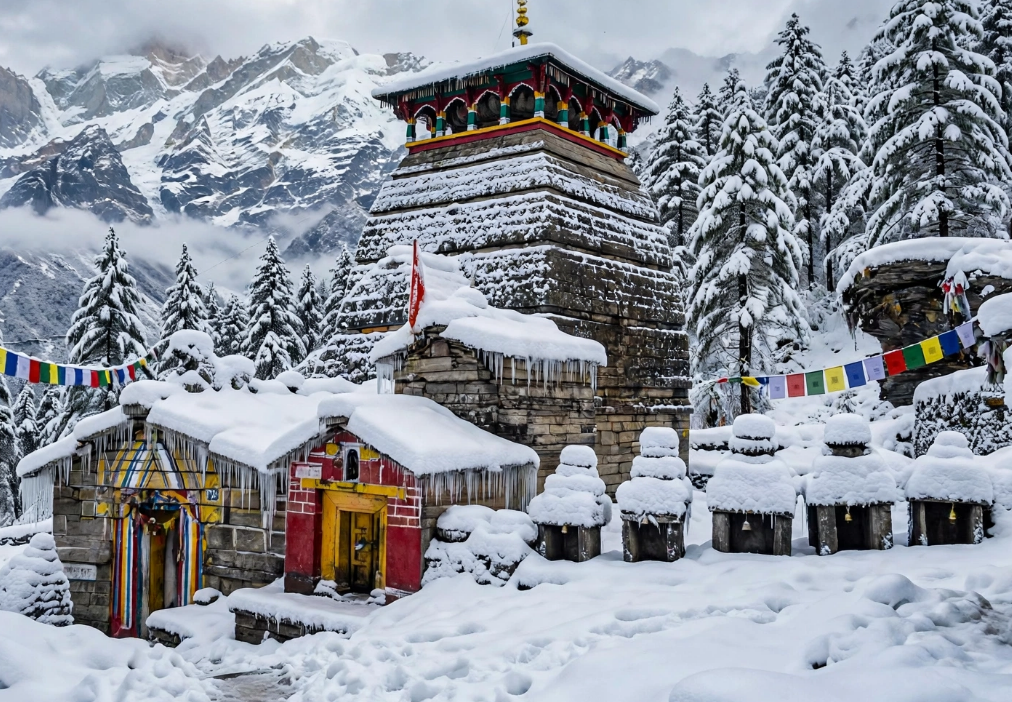
January is the heart of winter at Tungnath.
This is when snowfall is heaviest and most consistent. The entire trail — meadows, forests, stone steps, temple walls — disappears under a deep white blanket. Daytime temperatures hover around 4°C, while nights regularly plunge to -6°C or lower. At Chandrashila summit, wind chill can make it feel significantly colder.
Why January is unforgettable:
- The deepest, most consistent snow of the year
- The landscape is at its most dramatic and pristine
- Clear skies often follow snowfall, creating stunning blue-on-white vistas
- A true Himalayan winter experience without requiring technical climbing skills
Why January demands respect:
- The trail can be completely obscured by snow — a local guide is highly recommended
- Microspikes (and sometimes gaiters) are essential safety equipment, not optional
- The cold is genuinely dangerous without proper layering — thermal innerwear, waterproof shoes, woollen socks, gloves, and a warm cap are mandatory
- The trek difficulty increases from easy-moderate to moderate-challenging
If you have always wanted a snow trek and are willing to prepare properly, January delivers an experience that summer trekkers cannot imagine.
February: The Quiet Winter Month
February sits in an interesting middle ground.
Snow is still abundant — often 1–3 feet on the trail — but the heaviest falls of January have passed. Days are slightly warmer than January (around 7°C), and nights hover near -4°C. The trail becomes somewhat more accessible as local guides and operators gain confidence after the peak winter period.
February is ideal for:
- Snow lovers who want to avoid the peak January crowds
- Photographers seeking clean, undisturbed snowscapes
- Travellers who want a winter experience with marginally milder conditions
By late February, rhododendron buds begin forming in the lower forests, signalling that spring is not far away.
Best Month Based on What You Want
Use this table to match your goal with the right month:
❄️ Deep Snow Experience
📅 Recommended Month: January
👉 Why: Heaviest and most consistent snowfall.
❄️ Snow Trek (Milder Winter)
📅 Recommended Month: December / February
👉 Why: Fresh snow with slightly less extreme cold.
🌸 Rhododendron Flowers
📅 Recommended Month: April
👉 Why: Peak bloom period; forests turn crimson and pink.
❄️ Snow + Flowers Together
📅 Recommended Month: April
👉 Why: Lingering snow patches with spring blooms.
🥾 Most Comfortable Trekking
📅 Recommended Month: May
👉 Why: Stable weather, open temple, and moderate temperatures.
🌿 Greenest Landscapes
📅 Recommended Month: June / September
👉 Why: Fresh vegetation and post-monsoon greenery.
🏔️ Clearest Himalayan Views
📅 Recommended Month: October
👉 Why: Post-monsoon visibility and sharpest peak views.
📸 Best Photography
📅 Recommended Month: April / October
👉 Why: Flowers in spring or crystal-clear views in autumn.
🧘 Quietest Experience
📅 Recommended Month: November / February
👉 Why: Fewer crowds and peaceful trails.
🙏 Temple Darshan + Trek
📅 Recommended Month: May–June / September–October
👉 Why: Temple open, rituals active, and weather pleasant.
What Can Change From Year to Year?
Mountain weather does not follow a fixed calendar. Here is what experienced trekkers know:
- Snowfall timing can shift by 2–3 weeks. Some years see heavy November snow; other years remain dry until late December
- Snow melt varies dramatically. In heavy snow years, April trails may still have 2 feet of snow; in light years, the path may be clear by mid-March
- Monsoon withdrawal affects September conditions. An early retreat means a spectacular month; a late retreat means lingering rain
- Temple opening/closing dates are announced by BKTC and can shift by a few days based on the Hindu calendar
Before leaving for Chopta, always check:
- Recent weather forecast for Rudraprayag district
- Current road conditions (especially beyond Rudraprayag)
- Trail status and snow depth reports
- Tungnath Temple opening/closing status for the current year
- Local travel advisories
- Accommodation availability (book in advance for April–June and December–January)
Frequently Asked Questions
Which is the best month for Chopta Tungnath Trek?
For most travellers, April to June and September to November are the best periods. April is especially attractive for rhododendron flowers and possible remaining snow, while October is excellent for the clearest Himalayan views. May and June offer the most comfortable trekking conditions.
Which month is best for snow in Chopta?
December to February is the snow season, with January being the peak month for consistent, deep snowfall. December offers fresh snow with slightly milder conditions, while February provides good snow with fewer crowds.
Is April good for the Chopta Tungnath Trek?
Yes. April offers a rare combination of spring rhododendron flowers and lingering snow at higher sections. Rhododendron flowering is one of the biggest highlights of this period. However, the temple typically reopens in early May, so confirm dates if temple darshan is your priority.
Is May good for Tungnath?
Yes. May is generally the most comfortable period for trekking, with pleasant daytime temperatures around 20°C and the temple open for darshan. It is ideal for first-timers, families, and temple visitors.
Can I do the Chopta Tungnath Trek in July and August?
It is possible, but monsoon conditions make the trip less predictable. Rain, slippery trails, possible leeches, and road disruptions can make trekking and travel more difficult. Keep a buffer day and avoid fixed-date plans during this period.
Which month has the clearest Himalayan views?
October is widely considered the best month for visibility. Post-monsoon conditions bring crystal-clear skies and sharp mountain panoramas that are unmatched in other seasons.
Is Chopta Tungnath suitable for beginners?
Yes, in the right season. The trek is graded easy to moderate and is accessible for beginners with reasonable fitness during April–June and September–November. The trail becomes more demanding in snow (December–February) or difficult weather.
When does the Tungnath temple open and close?
For 2026, the temple opens on 2 May (announced by BKTC) and is expected to close around 4 November (tentative, based on the Hindu calendar). The idol is moved to Makkumath, Ukhimath, during the winter closure.
Final Word
There is no single month that can be called the best for everyone — and that is exactly what makes the Chopta Tungnath Trek special.
March is for early blooms and deep snow.
April is for flowers and leftover snow.
May and June are for comfortable green-season trekking and temple visits.
September brings fresh post-monsoon scenery.
October is the gold standard for clear Himalayan views.
November is for quiet trails and crisp autumn air.
December to February is for those who want to experience Chopta in its most dramatic, snow-covered form.
So before booking your Chopta Tungnath Trek, decide what you want to see and experience first. Once that is clear, choosing the right month becomes not just easier – it becomes obvious.