Why Kedarkantha is India's Favorite Winter Trek
“When is the best time to visit Kedarkantha for snow?”
Quick Overview: Kedarkantha Trek Facts
| Detail | Information |
|---|---|
| Maximum Altitude | 12,500 ft (3,810 m) |
| Trek Distance | 19–23 km |
| Duration | 5 Days / 4 Nights |
| Difficulty Level | Easy to Moderate |
| Base Village | Sankri, Uttarkashi |
| Best Season for Snow | December to March |
| Region | Govind Wildlife Sanctuary, Uttarakhand |
Best Time to Visit Kedarkantha for Snow: Month-wise Breakdown
🌨️ December — The Snow Season Begins
Day Temperature: 2°C to 8°C
Night Temperature: -5°C to -10°C
- Fresh snowfall begins — perfect for snow lovers
- Trails are less crowded compared to peak January
- Juda Ka Talab starts freezing
- Christmas and New Year batches add festive vibes
- Carry proper thermal layers and waterproof gloves
- Early December may have patchy snow; mid-to-late December is ideal
🌨️ January — Peak Winter & Maximum Snow
Day Temperature: 0°C to 5°C
Night Temperature: -10°C to -15°C
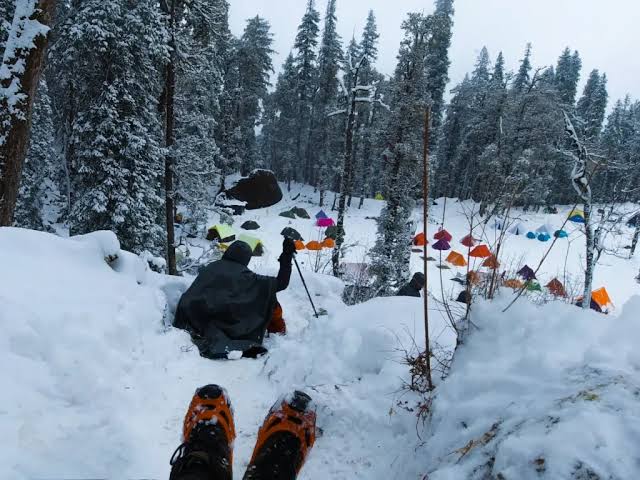
- Maximum snow accumulation on trails
- Frozen Juda Ka Talab — a magical sight
- Best photography opportunities
- Summit sunrise views are at their finest
- Nights are extremely cold — carry heavy down jackets
- Trekking poles and microspikes are highly recommended
- Book early as this is the peak season
🌨️ February — Deep Snow & Clear Skies
Day Temperature: 0°C to 6°C
Night Temperature: -8°C to -12°C
- Deep snow cover throughout the trail
- Clearer skies compared to January
- Less crowded than January — better for peaceful trekking
- Perfect for photography and snow activities
- Snow can be deep in sections — good trekking shoes essential
- Start early on summit day to avoid strong winds
🌸 March — End of Snow Season, Beginning of Spring
Day Temperature: 5°C to 12°C
Night Temperature: -2°C to 5°C
- Snow still present at higher altitudes
- Pleasant daytime temperatures
- Rhododendron flowers begin blooming
- Less crowded, better availability
- Carry layers — days are warmer, nights still cold
- Snow quality may be icy in patches
🍂 November — Pre-Winter Snow (Occasional)
Day Temperature: 5°C to 12°C
Night Temperature: -2°C to 2°C
- Crisp autumn weather with clear mountain views
- Occasional early snowfall at summit
- Dry trails — easier trekking
- Beautiful autumn colors in forests
Kedarkantha Trek Temperature & Weather Comparison
🍂 November
❄ December
🏔 January
☃ February
🌸 March
🌿 April
What Makes Kedarkantha the Best Winter Snow Trek?
1. Beginner-Friendly Summit Climb
2. 360° Panoramic Summit Views
- Swargarohini Range
- Bandarpoonch Peak
- Black Peak (Kalanag)
- Ranglana Peak
3. Magical Snow-Covered Forests
4. Frozen Juda Ka Talab
5. Spectacular Summit Sunrise
Essential Packing List for Kedarkantha Winter Trek
| Category | Items |
|---|---|
| Clothing | Thermal innerwear, fleece jacket, down jacket, waterproof windcheater, trekking pants (2 pairs), woolen cap, waterproof gloves, warm socks (4-5 pairs) |
| Footwear | High-ankle trekking shoes with good grip, camp slippers |
| Accessories | UV sunglasses, sunscreen SPF 50+, headlamp with extra batteries, water bottle (2L), trekking pole, lip balm, power bank |
| Safety Gear | Personal medicines, first aid kit, government ID proof |
| Extras | Waterproof backpack cover, rain cover for bags |
Recommended 5-Day Kedarkantha Trek Itinerary
| Day | Route | Distance | Altitude |
|---|---|---|---|
| Day 1 | Dehradun → Sankri (Drive) | 190 km | 6,400 ft |
| Day 2 | Sankri → Juda Ka Talab | 4 km | 9,100 ft |
| Day 3 | Juda Ka Talab → Kedarkantha Base | 4 km | 11,250 ft |
| Day 4 | Base → Summit → Juda Ka Talab | 6 km | 12,500 ft |
| Day 5 | Juda Ka Talab → Sankri → Dehradun | 4 km + Drive | — |
👉 Book your complete package: Kedarkantha Trek 2026-27
Expert Tips for Kedarkantha Snow Trek
- Start fitness preparation 4 weeks before — walk/jog 4-5 km daily
- Layer your clothing — it’s easier to adjust to changing temperatures
- Stay hydrated — drink water even if you don’t feel thirsty
- Start summit push early — around 2:00 AM to catch the sunrise
- Carry microspikes — essential for icy summit sections
- Book with a reliable operator — safety equipment and experienced guides matter
👉 Book your complete package: Kedarkantha Trek 2026-27
How to Reach Kedarkantha Trek Base (Sankri)
| Mode | Details |
|---|---|
| By Air | Nearest airport: Jolly Grant Airport, Dehradun (~25 km from city) |
| By Train | Dehradun Railway Station — well connected to Delhi, Mumbai, Lucknow |
| By Road | Dehradun → Mussoorie → Purola → Mori → Sankri (190 km, 8-10 hours) |
👉 Book your complete package: Kedarkantha Trek 2026-27
Frequently Asked Questions (FAQs)
Q1. Which month is best for Kedarkantha Trek for snow?
A: January and February are the best months for maximum snow cover on the Kedarkantha Trek. December is also excellent for fresh snowfall.
Q2. Is Kedarkantha Trek safe for beginners in winter?
A: Yes! Kedarkantha is considered one of the best beginner-friendly winter treks in India. No technical skills are required, but basic fitness is recommended.
What is the temperature during Kedarkantha Winter Trek?
A: Day temperatures range from 0°C to 8°C, while nights can drop to -5°C to -15°C at higher campsites.
Q4. Can I see snowfall during Kedarkantha Trek?
A: Yes! The chances of witnessing live snowfall are highest in December and January.
Q5. How much does Kedarkantha Trek cost?
A: The Kedarkantha Trek package typically ranges from ₹7,999 to ₹9,999 per person (excluding GST). Check our latest pricing at Dream Go Himalayas.