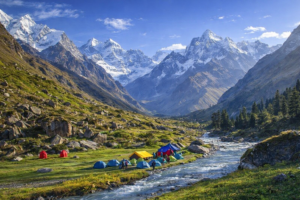

Har Ki Dun — also known as the “Valley of Gods” — is a hidden gem in the Garhwal Himalayas that transforms into a different paradise every season. Nestled at an altitude of 11,700 feet, this valley is surrounded by majestic peaks like Swargarohini, Bandarpoonch, and Black Peak. But the big question is: What is the Har Ki Dun Trek Best Time 2026?
If you’re planning to embark on this trek in 2026, this guide is perfect for you. In this article, we cover a detailed season-wise breakdown, month-wise temperature, and the unique experiences each season offers.
💡 Quick Tip: If you want to check the complete trek package, detailed itinerary, and booking details, don’t miss our comprehensive guide: Har Ki Dun Trek 2026 – Complete Itinerary, Cost & Route
Har Ki Dun Trek Best Time 2026: Quick Overview
| Season | Months | Temperature | Best For |
|---|---|---|---|
| Spring & Summer | April – June |
10°C to 20°C (Day) 2°C to 10°C (Night) | Beginners, Families, Nature Lovers |
| Monsoon | July – August | 8°C to 18°C | Experienced Trekkers (Not Recommended) |
| Autumn | September – November |
5°C to 15°C (Day) -2°C to 7°C (Night) | Photographers, Clear Views |
| Winter | December – March |
0°C to 10°C (Day) -5°C to -10°C (Night) | Snow Lovers, Adventure Seekers |
Spring & Summer (April to June) — Most Popular Season
Spring and summer are the most recommended times for the Har Ki Dun Trek. During this period:
- Weather: Daytime temperatures range between 10°C and 20°C, making trekking comfortable for beginners and families.
- Landscapes: After the snow melts, the valley turns lush green. Rhododendron flowers bloom, and wildflowers paint the meadows in shades of blue, yellow, and pink.
- Visibility: Crystal clear skies offer breathtaking views of the Himalayan peaks.
- River Flow: The Supin River flows at a moderate level, adding to the scenic beauty of the trek.
Best Months: May and June — when the weather is most stable and the trails are completely clear.
Who Should Go: Ideal for first-time trekkers, families, and nature photography enthusiasts.
Autumn (September to November) — Best for Views & Photography
If you want to experience crystal-clear mountain views and autumn colors, this season is perfect:
- Weather: Post-monsoon clarity makes the atmosphere absolutely pristine, offering breathtaking views of snow-covered Himalayan peaks.
- Temperature: Daytime 5°C to 15°C, nighttime -2°C to 5°C.
- Landscapes: Forests turn golden, orange, and yellow.
- Snow: There’s a chance of the first snowfall in late November.
Best Months: October and November — when the weather is most stable and the views are clearest.
Who Should Go: Photographers, experienced trekkers, and those who prefer peaceful trails.
Winter (December to March) — Snow Trek Experience
In winter, Har Ki Dun transforms into a magical snow paradise:
- Weather: Daytime 0°C to 10°C, nighttime -5°C to -10°C.
- Snow Cover: The valley, forests, and villages are blanketed in fresh snow.
- Challenges: Trails become slippery, and extra gear like microspikes and gaiters is required.
- Note: The Forest Department of Uttarakhand officially closes the Har Ki Dun trek for visitors from December until mid-March.
Who Should Go: Experienced trekkers who seek the thrill of snow trekking and winter camping.
Monsoon (July to August) — Not Recommended
During the monsoon, the valley looks incredibly green and beautiful, but:
- Challenges: Heavy rainfall, slippery trails, landslides, and poor visibility.
- Risks: Road blockages and landslides are common in some areas of Uttarakhand.
- Leeches: Leech problems increase on forest trails.
Verdict: Even for experienced trekkers, it’s better to avoid this season.
Month-Wise Temperature Guide 2026
| Month | Day Temperature | Night Temperature | Conditions |
|---|---|---|---|
| March | 5°C to 15°C | -2°C to 5°C | Lingering snow, spring begins |
| April | 10°C to 18°C | 2°C to 6°C | Blooming rhododendrons, clear skies |
| May | 12°C to 20°C | 4°C to 8°C | Best weather, lush green valleys |
| June | 15°C to 22°C | 6°C to 10°C | Clear skies, pre-monsoon showers possible |
| July | 10°C to 22°C | 8°C to 15°C | Heavy rainfall, slippery trails |
| August | 10°C to 20°C | 8°C to 14°C | Monsoon peak, avoid trekking |
| September | 10°C to 18°C | 3°C to 7°C | Post-monsoon clarity begins |
| October | 8°C to 15°C | 0°C to 5°C | Best views, autumn colors |
| November | 5°C to 12°C | -2°C to 3°C | Crisp air, early snowfall possible |
| December | 0°C to 10°C | -5°C to -2°C | Heavy snowfall, trek mostly closed |
| January–February | -5°C to 8°C | -10°C to -5°C | Extreme cold, trek closed |
Which Season Should You Choose in 2026?
| Your Preference | Best Time |
|---|---|
| First-time trekker | April to June |
| Family with kids | May to June |
| Photography & Views | September to November |
| Snow trekking | December to March (if open) |
| Budget-friendly | March or September (off-peak) |
| Peaceful trails | October-November |
Important Tips for Har Ki Dun Trek 2026
- Permits: Trekking permits from the Forest Department and Govind National Park are mandatory — these are available at Sankri.
- Fitness: This is an easy-to-moderate trek, but basic stamina is essential — practice walking 5-6 km daily.
- Acclimatization: At 11,700 feet, oxygen levels are lower — stay hydrated and follow your trek leader’s instructions.
- Packing: Layered clothing, raincoat, warm jacket, and proper trekking shoes are a must.
Conclusion
The Har Ki Dun Trek Best Time 2026 is April to June (Spring/Summer) and September to November (Autumn). Both seasons offer pleasant weather, safe trails, and stunning Himalayan views. If you want to experience snow-covered trails, December to March also offers an unforgettable adventure.
If you want to experience this “Valley of Gods” in 2026, start planning now!
🎒 Ready to Book? Visit our complete trek package, detailed itinerary, and 2026 departure dates: Har Ki Dun Trek 2026 – Book Your Adventure
Frequently Asked Questions (FAQs)
Q1. Which is the best month for Har Ki Dun Trek 2026? A: May, June, October, and November are the best — for stable weather and clear views.
Q2. Is Har Ki Dun Trek safe for beginners? A: Yes, this is an easy-to-moderate trek and perfect for beginners, provided they have basic fitness.
Q3. Is Har Ki Dun Trek possible in winter? A: The Forest Department officially closes the trek from December to mid-March. If it opens, it is only recommended for experienced trekkers.
Q4. What permits are required for Har Ki Dun Trek? A: Forest entry permit and Govind National Park permit — both can be obtained from Sankri.
Q5. Why should Har Ki Dun Trek be avoided during monsoon? A: Due to heavy rainfall, slippery trails, landslides, and poor visibility, this season is risky.